
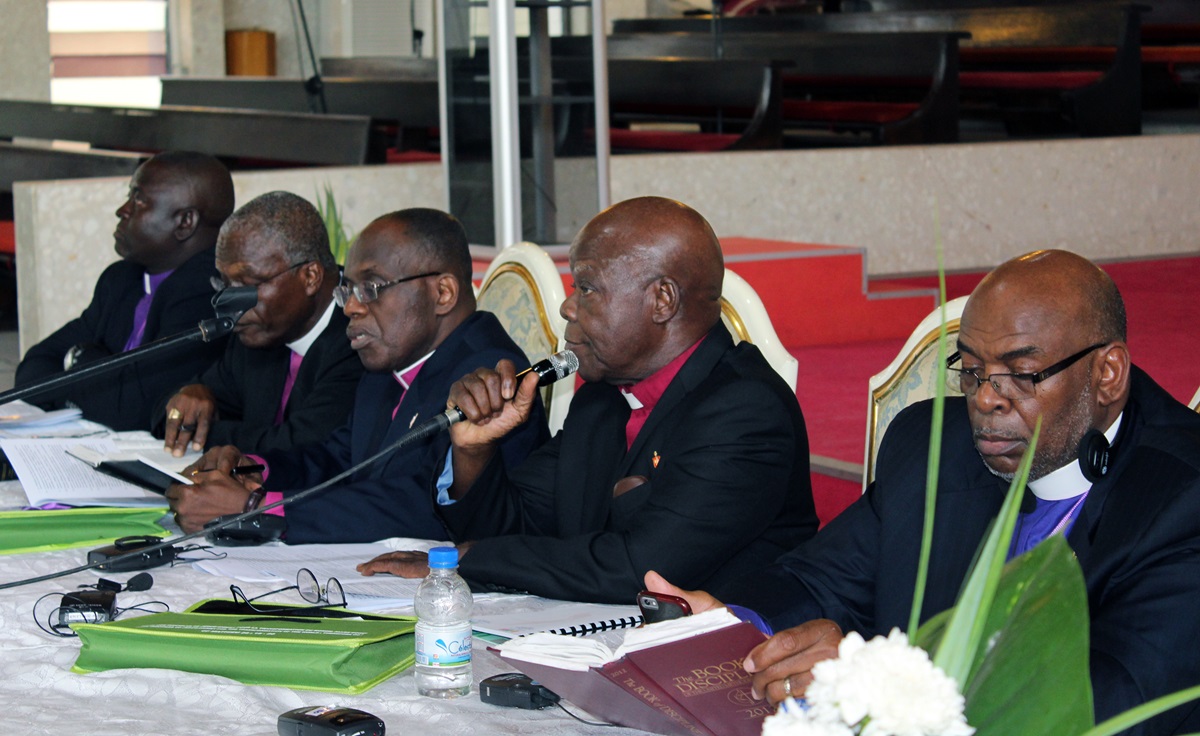
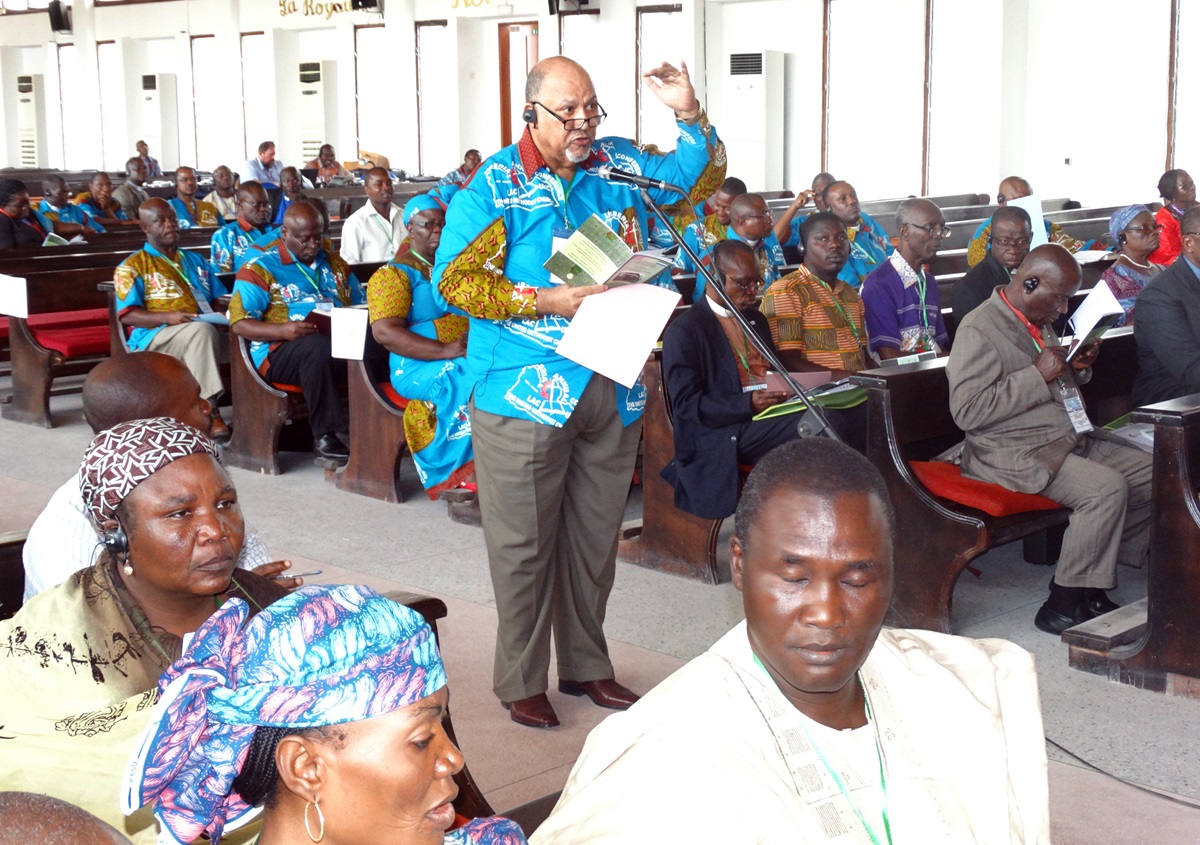
West Africa Central Conference delegates overturned a Liberia Conference rule that barred divorced clergy from being bishop candidates.
The rule was adopted last April when members of the Liberia Conference voted 433 to 24, with six abstentions, to affirm the ban on divorced clergy being nominated for bishop.
Rudoph Merab, the Liberia Conference lay leader, asked the West Africa Central Conference delegates to support that ban by amending the Book of Discipline, the denomination’s governing document. He argued that Paragraph 403, which deals with the role of bishops and district superintendents should be amended to include “the prescription and qualification of a candidate be as per Scripture/Bible.”
Merab and others have argued that the language in the United Methodist doctrinal standards would support the ban, as would Scripture.
Merab argued that the church must uphold Scripture to have the moral authority to hold the secular society accountable for wrongdoings.
Easmon Ngakui, a barrister and delegate from Sierra Leone, argued it was wrong to discuss the amendment because it was not a provision in the United Methodist Book of Discipline. Adopting it, he said, would be rewriting the Book of Discipline, which the West Africa Central Conference did not have a mandate to do.
Unlike U.S. jurisdictions, individual central conferences have authority to make “such changes and adaptations” to parts of the Book of Discipline — the denomination’s law book — as missional needs and differing legal contexts require.
No votes were taken, and Merab withdrew his submission after other speakers argued the amendment was out of place. Also, different interpretations of the Discipline paragraphs were given that did not support barring divorced candidates.
The upshot is that Liberia’s rule did not prevail for the central conference.
Eighty delegates — 20 each from Liberia, Nigeria, Sierra Leone and Cote d’Ivoire — are attending the conference at which a bishop of the Liberia Episcopal Area will be elected.
In February, the Liberia Conference nominated two candidates. The Rev. Samuel Quire, administrative assistant to current Liberia Conference interim Bishop Arthur F. Kulah, received 581 votes, and the Rev. David Tokpah, a pastor in the Greater New Jersey Conference, received 509 votes.
The Rev. Julius Nelson received votes at the annual conference in February. But he was barred by the divorce legislation. Nelson is vice president and dean of student affairs of the University of Liberia. Now that the divorce ban has been lifted, he could be nominated from the floor of the West Africa Central Conference on Dec. 17. Others could also be nominated from the floor during the bishop election.
The new bishop will succeed Interim Bishop Arthur Kulah. Kulah was called out of retirement to serve the Liberia Episcopal Area after Bishop John Innis retired on Sept. 1. Innis led the conference after he was elected in 2000 until his retirement.
At the opening worship service on Dec. 15, Bishop Benjamin Boni of the Côte d’Ivoire Area preached. He appealed to delegates to preach a holistic gospel by helping to fight corruption, pollution and infant mortality in their respective conferences. “The church needs to take responsibility of changing the world,” Boni said. He urged delegates to put the interest of The United Methodist Church first, adding that delegates should not allow “their selfish interests” to override the interests of the church.
In the keynote address, Robert Beugré, a United Methodist lay preacher and minister at the presidency of the Republic of Cote d'Ivoire, told delegates that God would raise up stones to work for him if nobody did. He challenged delegates to seek peace in their individual conferences as well as their countries. “Make regional peace a priority as a church,” he concluded.
Swen is a communicator in Liberia. Jusu is the communicator for the Sierra Leone Conference. News media contact: Vicki Brown, Nashville, Tenn., (615) 742-5470 or [email protected]
Like what you're reading? Support the ministry of UM News! Your support ensures the latest denominational news, dynamic stories and informative articles will continue to connect our global community. Make a tax-deductible donation at ResourceUMC.org/GiveUMCom.


