
It takes a village to make a pilgrimage of healing. A journey of healing is not an individual act, but a collective act.
As part of the Rocky Mountain Conference, I, together with Bishop Elaine Stanovsky and fellow pilgrims, have been honored to be part of the healing journey in relationship with Sand Creek descendants. Along the way, I was privileged to get to know Sand Creek descendants and Native American friends from across the United Methodist connection.
Sand Creek Massacre
On Nov. 29, 1864, approximately 675 United States soldiers under the command of Col. John Chivington killed more than 200 Cheyenne and Arapaho villagers, mostly elderly men, women and children, approximately 180 miles southeast of Denver near Eads, Colorado. This massacre, one of many, is unique in that the commander of the attack was a Methodist minister.
Silas Soule
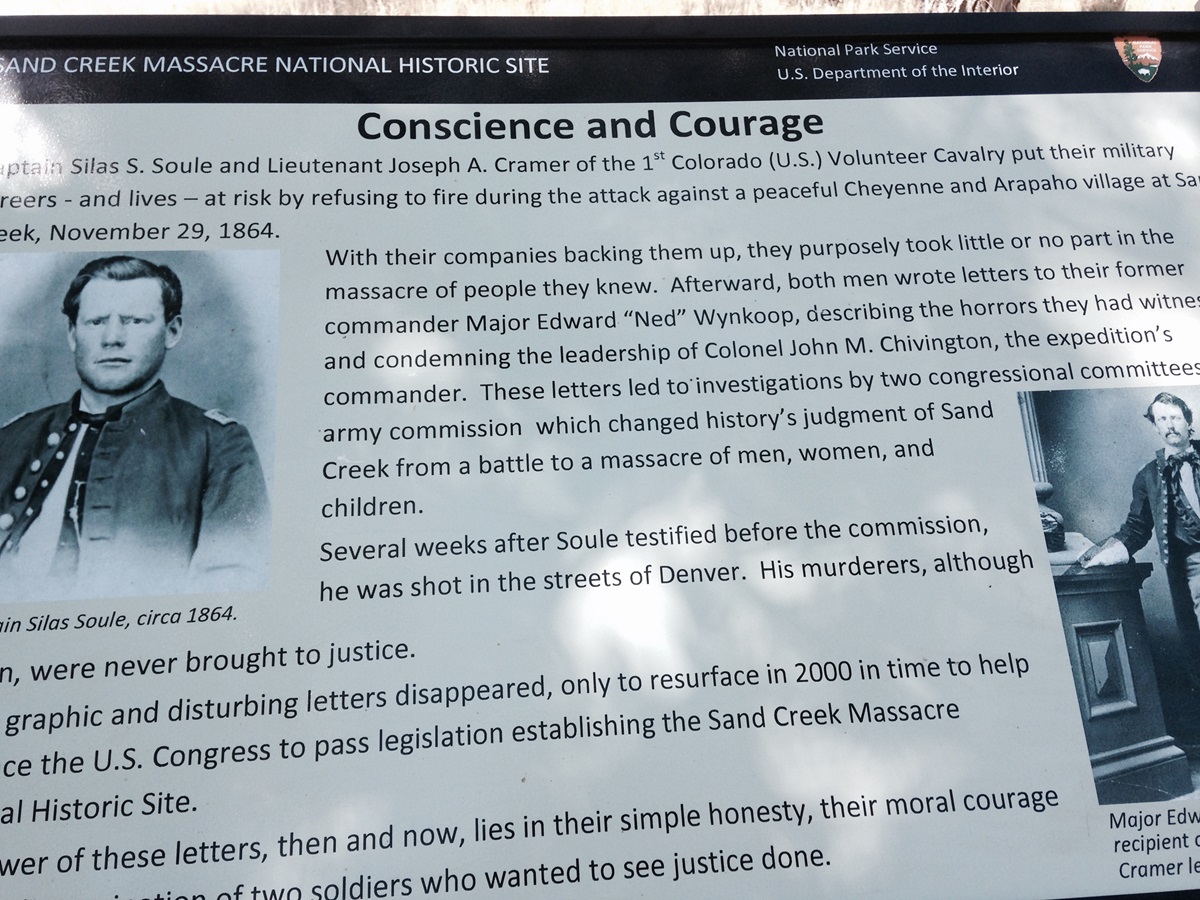
In the midst of the massacre, there were people who saw the injustice of this attack and protested with courage. Captain Silas Soule, commander of Company D, 1st Colorado Cavalry, pleaded with his commander, Col. Chivington, not to attack the peaceful villagers and refused to order his soldiers to participate in the massacre,
Three weeks later, he sent a letter to Major Edward Wynkoop concerning the attack. The letter played a major role in alerting the United States Congress and the public to the massacre. He testified in military hearings against his commander and one year later was assassinated for his efforts to illuminate the truth.
Every time I read his letter I can do nothing but mourn over the sub-human acts done to the innocent Native people, especially women and children. The letter is so graphic that reader discretion is advised.
Visits to Sand Creek Massacre Site
My first visit to the site of the Sand Creek Massacre was in 2011, when the entire board of the General Commission on Christian Unity and Interreligious Concerns (predecessor of the Office of Christian Unity and Interreligious Relationships) made a pilgrimage to the site. I recall a Sand Creek descendant telling the story about the healing of the land. According to him, when the site of the Sand Creek Massacre was dedicated as a National Historic Site in 2007, the wind was so strong that it was very hard to remain standing. He said it was as if those who were killed 150 years ago were crying. Now, with much spiritual worship and prayers over the land, the wind is not as harsh as 20 years ago.
I remember feeling a great sadness and sorrow from my visit to the Sand Creek site in 2012. I observed the burial of the remains of two massacre victims that were repatriated from the Smiithsonian. One was that of a 10-year-old child. I asked myself, how do we reach out to the people to whom we did such harm?
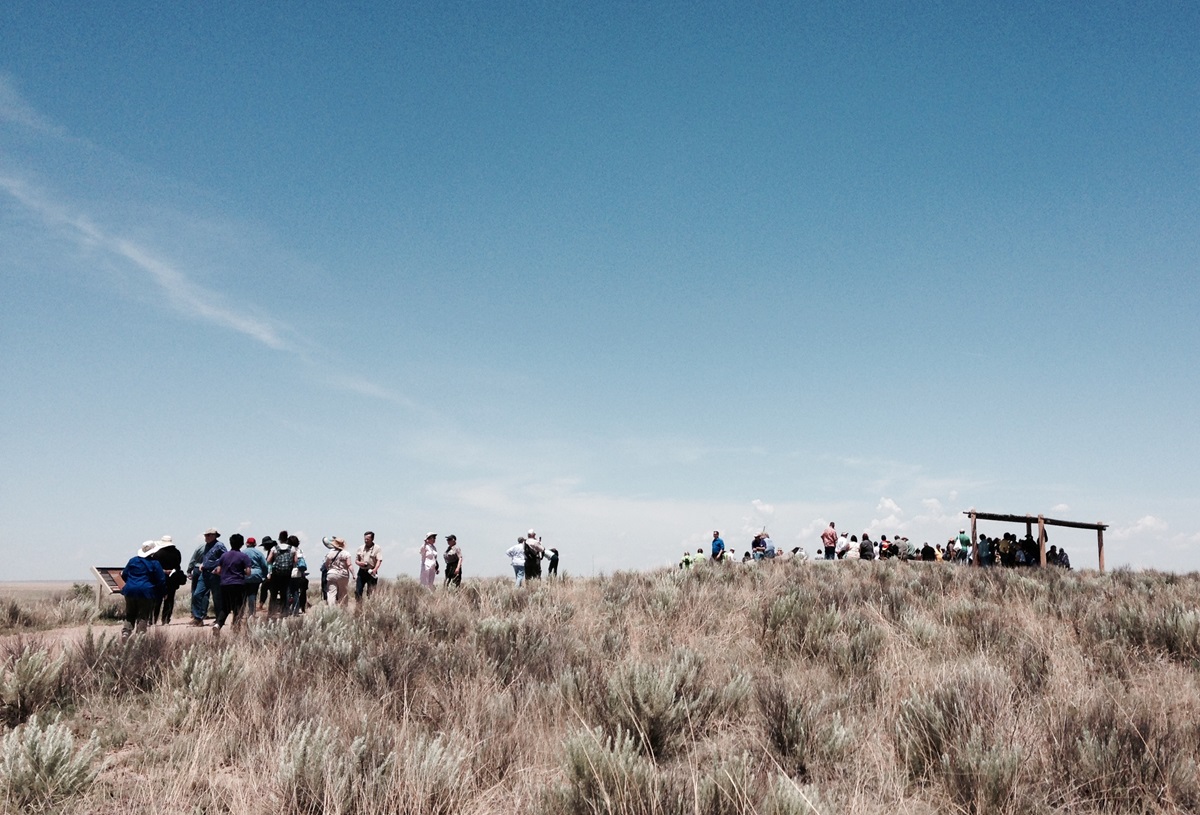
Since then, I've visited the site several times. One memorable visit was when the entire Rocky Mountain Conference made a group pilgrimage to the site in June 2014 during its annual conference session.
Pilgrimage to Sand Creek Massacre Site
Over 620 people participated in that pilgrimage to the site of the Sand Creek Massacre. Ben Ridgely, Northern Arapaho tribal member, said, "Your conference honored us descendants last week." Ben went on to say, "People were sincere and respectful. I came back and told my people that the conference was awesome. We are proud of you. You are good people. God bless you. We hold you in our prayers."
It has been a sacred, yet a painful journey for me as I bring my own story of marginalization. I witnessed racism and sexism living as an Asian American in the United States. I witnessed the same serving the church as an Asian-American ordained clergy woman. I know firsthand what oppression does to a nation occupied or colonized by a super-power country. My mother country, Korea, is still living with the repercussions of 36 years of Japanese occupation.
Many Sand Creeks Still Happening
What is tragic is there are many other Sand Creeks happening today. Palestine is one. Child soldiers are another. Acts of injustice are still happening around the world.
The Sand Creek report that was made on May 18 was an act of remembering. Remembering helps heal historic wounds and enables us to move forward to a healing journey.
A Resilient Hope for Healing
I bring a resilient hope with me as I write this. There is a new day coming, but, I am aware, only with our love, faith and trust. And God’s healing grace. As the people of The United Methodist Church ,we will continue to be on the journey of healing and striving for life.
It takes all of us to make a pilgrimage of healing and hope.
Kang is the director of mission and ministry for the Rocky Mountain Conference. Contact her at [email protected].
Like what you're reading? Support the ministry of UM News! Your support ensures the latest denominational news, dynamic stories and informative articles will continue to connect our global community. Make a tax-deductible donation at ResourceUMC.org/GiveUMCom.


