
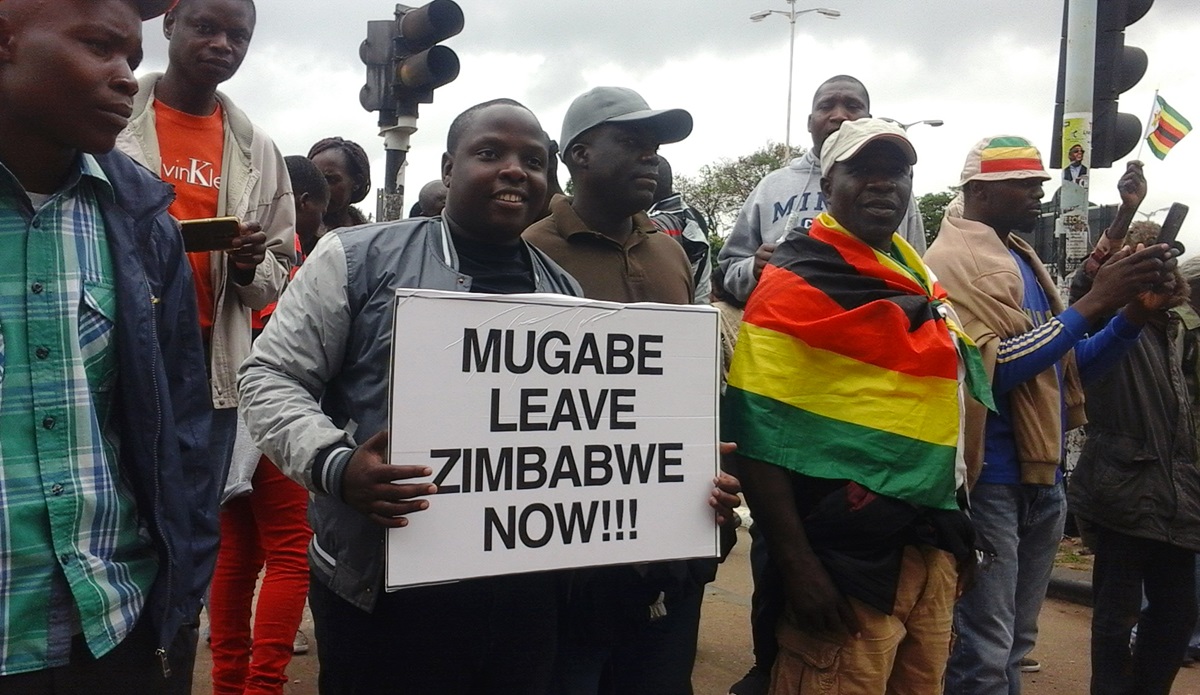
A new president in Zimbabwe after 37 years of what many called “a government of tyranny” is bringing hope said some United Methodists who are closely watching from inside the country.
“President Emmerson Mnangagwa is a hard-working leader. He is a hands-on person. That is what the country needs at this point in time,” said United Methodist Bishop Eben Nhiwatiwa, episcopal leader in Zimbabwe. “I was privileged to be one of those among the leaders of the church who shook hands with the president at his inauguration ceremony on Friday, Nov. 24. We pray that God will give him wisdom.”
Former president Robert Mugabe and his wife were placed under house arrest on Nov. 15 and Mugabe resigned on Nov. 21. On Nov. 24, Mnangagwa took the oath of office before 70,000 people in Harare’s sports stadium.
United Methodist-related Africa University and The United Methodist Church in Zimbabwe continue to operate without any challenges under the new president, Nhiwatiwa said.
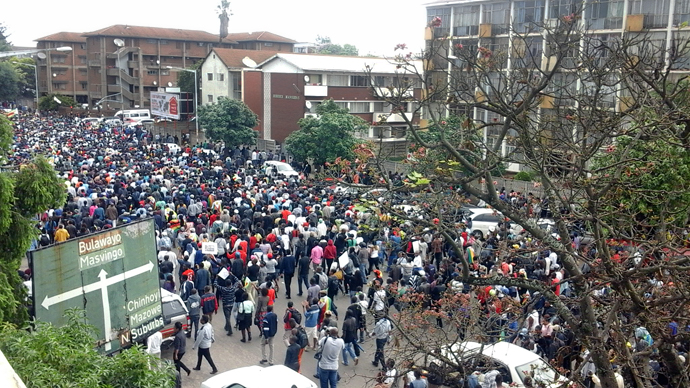
Tens of thousands of Zimbabweans gathered in Harare calling for President Mugabe to give up power after he was placed under house arrest.
Munashe Furusa, vice chancellor of Africa University, said the university is safe and functioning smoothly.
“A few days ago, we signed an agreement with the Ministry of Higher and Tertiary Education, Science and Technology Development to provide training in intellectual property to other higher education institutions in Zimbabwe and the nation at large. This shows that the government has great confidence in the quality of education offered at Africa University and considers our university a major part of Zimbabwe's development,” he said.
There is a culture of smooth transition emerging in Africa, said retired Bishop David K. Yemba, who was leader of the Congo Central Conference and is also chancellor of Africa University and a member of the board of directors.
“The prayers of the people of Zimbabwe and of so many believers on the continent and beyond have been heard,” he said. “The recent transition in Zimbabwe, following the ones which took place in the other African countries such as Angola, Zambia (and) Senegal, for instance, gives hope to the country, The United Methodist Church and, of course, Africa University. We continue to pray that peace prevails on the land.”
The president made a commitment to revive the economy, said Grace Musuka, a Central Africa regional missionary for United Methodist Women.
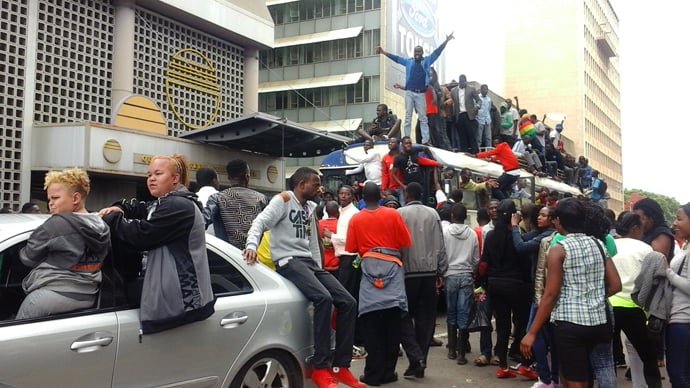
Protestors marched in the streets demanding President Robert Mugabe step down.
“That gives us hope for peace and national healing,” she said. “We all need to be proud to be Zimbabweans again. Our children and young people need to continue to develop a high level of self-esteem.”
A vibrant economy will help families stay together, she said, because as it is now, one spouse often has to leave the country in search of funds to help the family survive.
“Every year, Zimbabwe produces thousands of graduates, most of whom end up roaming the streets in search of jobs. They have no capital to start (their) own projects and no collateral to assist them to borrow from the banks. Education will become meaningful to children since they will have beacons to ensure that after attaining high levels of education they can become employers or be employed,” Musuka said.
During the Mugabe administration, Musuka said many essentials, such as affordable health care, food, good sanitation and medicine, have been out of reach.
“Many of us believe the new president has started well,” she said. “Our nation needs prayers so that we continue to be guided by the wisdom that comes from God.”
There are about 154,000 United Methodists in Zimbabwe, with some 600 churches and 455 clergy, according to 2016 figures from the General Council of Finance and Administration.
Gilbert is a multimedia reporter for United Methodist News Service. Contact her at 615-742-5470 or [email protected]. Kudzai Chingwe, Zimbabwe East Conference communicator, contributed to this report. To read more United Methodist news, subscribe to the free Daily or Weekly Digests
Like what you're reading? Support the ministry of UM News! Your support ensures the latest denominational news, dynamic stories and informative articles will continue to connect our global community. Make a tax-deductible donation at ResourceUMC.org/GiveUMCom.


