
Faith leaders in Sierra Leone are hoping to become a major voice in healing the country in the aftermath of Ebola.
One of the tools assisting them toward that goal is Channels of Hope, a program launched recently by World Vision, the Catholic Agency for Overseas Development and Catholic Relief Services.
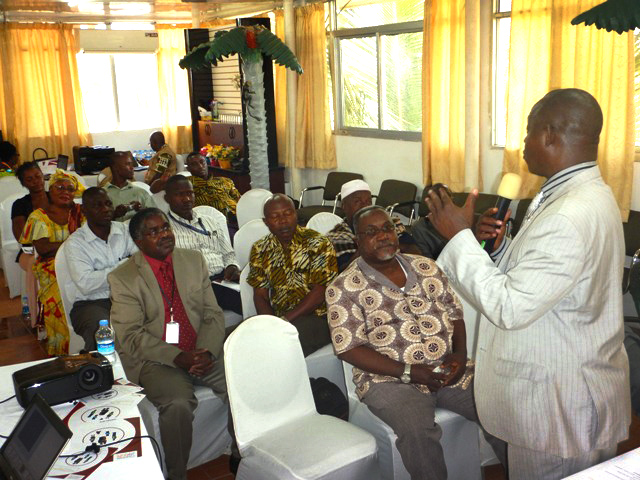
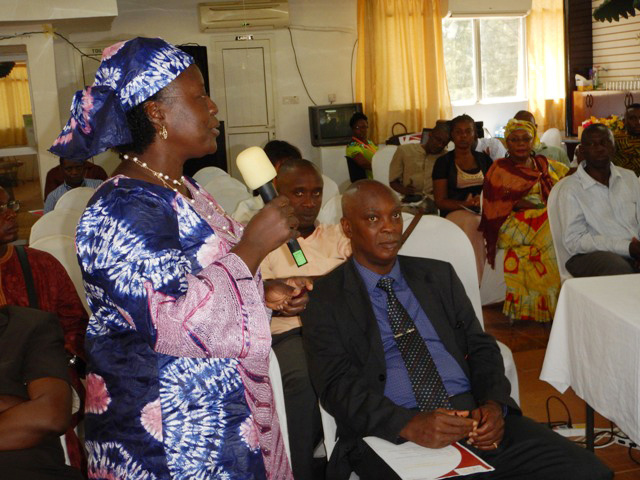
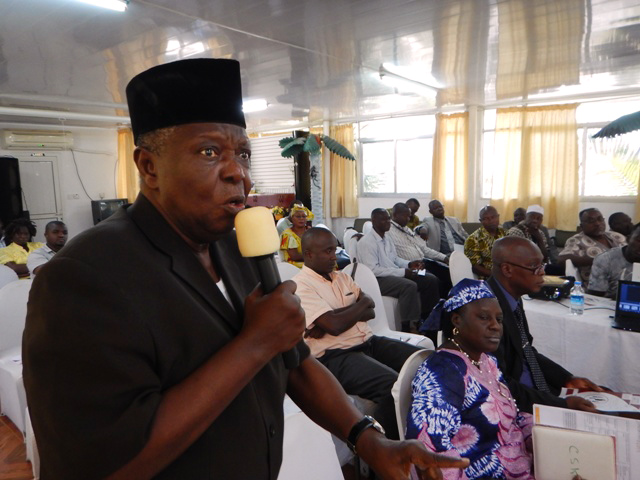
The first training for Christian and Muslim religious leaders in Bo was held Feb. 23-28. The Channels of Hope partnership anticipates a significant role for the Religious Leaders Task Force on Ebola, headed by United Methodist Bishop John Yambasu in the country’s post-Ebola recovery.
That task force was organized last July through the United Methodist Church Ebola Response Initiative, which is funded by the United Methodist Committee on Relief.
Originally developed to address the HIV/ AIDS pandemic in eastern and southern Africa, Channels of Hope has been adapted to meet the growing needs posed by Ebola, said Leslie Scott, World Vision’s Sierra Leone director.
“It is a tool that can address issues like food security, health, education, water and sanitation. Religious leaders are expected to use the tool to get communities to understand and become participatory in issues that affect their daily lives,” Scott said.
United Methodist text messages
Scott thanked Yambasu for the messages of hope and education that members of his staff have been receiving from The United Methodist Church.
“You could be down; you could be stressed, Then you receive a very short quotation from the Bible or some words of wisdom,” he said. The words are encouraging and help you remember “God is still on the throne – God is bigger than Ebola.”
Text messaging was one of the educational strategies on Ebola employed by the denomination, which also organized regional trainings on Ebola awareness and education for religious leaders and workers of faith-related health facilities.
United Methodists are envisioning a three-year post-Ebola response in Sierra Leone, focusing on prevention, advocacy, restoration and care.
During the February training, Mattia Koi Dimoh, World Vision’s operations director, said a message he received from the United Methodist bishop that morning was appropriate for the Channels of Hope launching: “God our healer, teach us to focus on hope.”
Ebola has created despair and a deep sense of loss for many. “Helping families and communities find hope in the midst of all this brokenness is one of the valuable contributions religious leaders can make at this point in time,” Dimoh pointed out.
Faith leaders need to be able to carry the message to their churches and mosques in a way “that is constructive, engaging and systematic enough before we can take it out to the districts and eventually out to their members of the community,” he said.
The 35 Muslims and Christians who took part in the weeklong training were graded at its conclusion. Successful participants will get another level of training in order to qualify to conduct trainings for communities.
Playing a critical role
Kayode Akintola, the Catholic Agency for Overseas Development’s Sierra Leone director, said the Ebola fight would have been even more difficult without faith leaders.
“Until the faith leaders stepped into the game, we were all groping in the dark,” he explained. “As faith leaders, you hold a very critical and central role not just because of Ebola but generally in the context of development in Africa and particularly for a country like Sierra Leone.”
Alhaji UNS Jah, the national chairman for Islamic Action Group and founding member of the Inter-Religious Council of Sierra Leone, said that religious leaders are challenged to make their impact felt at the national level and work as a team to build up their own resources and resource base.
“Religion in the 21st century has to be redefined as not only limited to prayers and funeral services. It is a way of life in which we have to be involved in all facets of life that were hitherto not focused upon – nutrition, child survival, governance issues,” Jah said.
He cited the role religious leaders in Sierra Leone played in 1986 when the country was besieged with the problem of poor participation in the nationwide immunization for measles.
“When the religious leaders came on board at the time, the success rate changed from 24 percent to 75 percent,” he said.
‘Speak the truth with love’
The Rev. Christiana Sutton Koroma of St. Paul’s Congregational Evangelical Mission said the most thrilling part of the training was that it gave participants a different perspective and more understanding of the problems of those hurt by Ebola.
Survivors who narrated their experiences with Ebola talked about being stigmatized and lonely.
“We must stand for justice, speak the truth with love, restore the dignity and honor of people affected and infected, and teach others how to treat them,” she said.
About 175 pastors and imams are expected to train their own communities. The goal is to have 7,000 people trained by the end of April.
Yambasu encouraged World Vision to keep its word on continuing training at the community level, too, as that would allow Channels of Hope to have significant impact in the Ebola recovery.
Training people without empowering them to reach out to communities would be “a waste of resources,” the bishop said, because the communities that badly need the knowledge about Ebola would not receive it.
*Jusu is director of communications for The United Methodist Church in Sierra Leone.
News media contact: Vicki Brown at (615) 742-5470 or [email protected].
Like what you're reading? Support the ministry of UM News! Your support ensures the latest denominational news, dynamic stories and informative articles will continue to connect our global community. Make a tax-deductible donation at ResourceUMC.org/GiveUMCom.


