
Overwhelmed by the magnitude of the flooding and mudslide that killed hundreds Aug. 15, The United Methodist Church has vowed to maintain a long-term presence in two disaster-devastated communities.
Bishop John Yambasu said Sept. 6 that the Sierra Leone Conference will dig three boreholes with about $36,000 in funding from the United Methodist Committee on Relief. The wells will provide safe drinking water for the Pentagon and Kamayama communities after emergency relief phases out.
In collaboration with community leaders, the conference also plans to open a United Methodist health center at Kamayama that will provide primary health care for the two communities, which have no health facility now. The church also will open a worship center in Kamayama, Yambasu said.
The two boreholes will be at Kamayama and at Pentagon, said Smart Senesie, Sierra Leone Conference’s director of missions and development.
Drinking water for the two communities had come from hand-dug wells, but bodies were discovered in some of the wells after the landslide and flooding.
“Even if we chose to clean up and sanitize those wells, the communities do not feel like returning to them as sources of drinking water because of the permanent scar on their minds about the wells. Hence the need for new boreholes as a safe source of drinking water,” said Senesie, who lives in the Kamayama community.
Yambasu said the church should play a much greater role in the life of the mudslide survivors after the emergency relief period is over.
“This is the time we as a people are likely to fail the survivors, but I want the church to remain engaged in their lives when all the people are gone, including the government,” he said.
He pointed out the tendency for survivors to be left to look after themselves once the emergency services come to an end.
“We did so during the civil war and the Ebola pandemic; the church must not allow that to happen to the mudslide and flooding survivors,” Yambasu said.
The need for the church to stay in the life of the people affected by the twin disasters for a sustained period is crucial considering the depth of agony survivors have experienced, said the Rev. James Boye-Caulker.
Boye-Caulker, Western District superintendent, has been coordinating United Methodist pastors who are providing counseling and prayers at the displaced centers for people affected by the disaster. He said he has heard scary stories from survivors and believes it will be a long time before some of the traumatized recover.
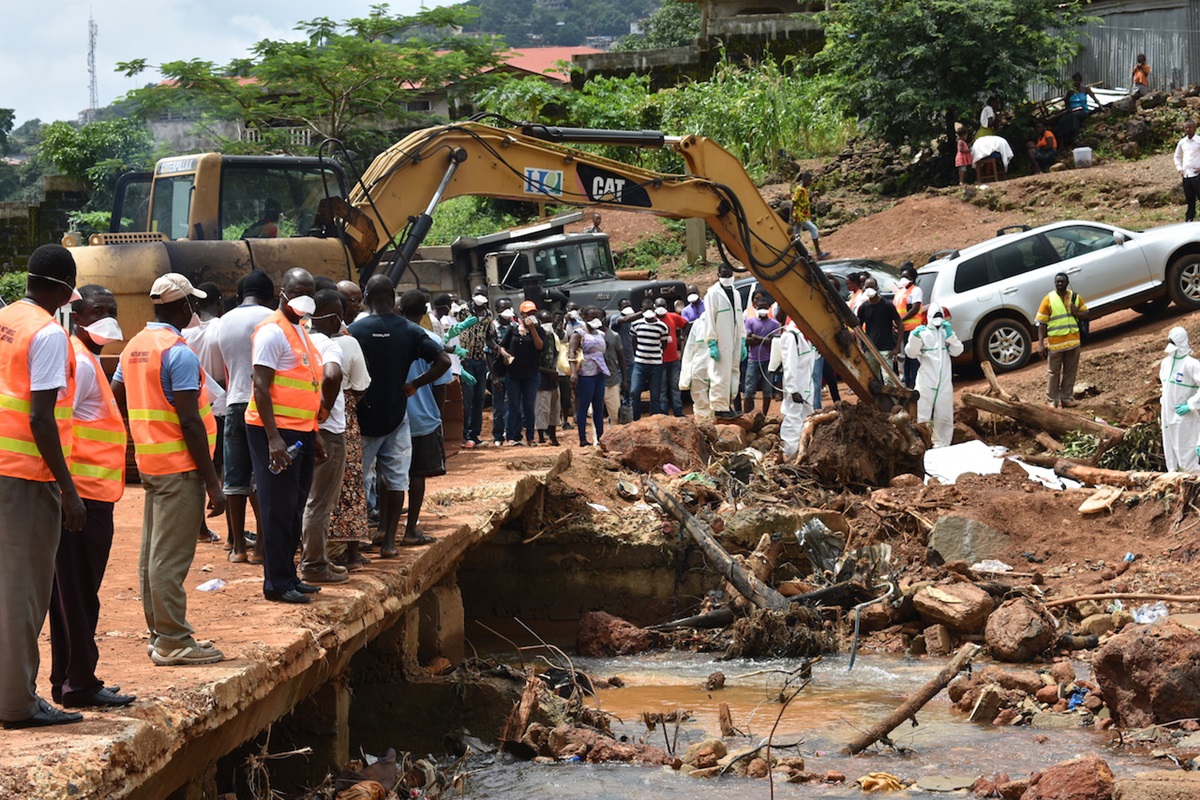
The bishop was moved to do more after he was at the site when a body was recovered from the mud at the bottom of a bridge in Kamayama — nearly two weeks after the flooding and mudslide.
The bishop was leading the United Methodist Disaster Response Team in the community to visit and pray with the people at the emergency relief centers when news broke that an excavation machine was going down to the stream to recover a body trapped under the bridge. He asked the rest of the team to follow him to the site.
Yambasu looked disturbed and said witnessing the recovery of bodies is a completely different experience than hearing about it in the news.
“I feel just sad for the nation — that our government can really not stop people from living in places they are not supposed to stay; especially these disaster-prone areas,” Yambasu said.
He expressed hope that the tragedy would teach every Sierra Leonean a hard lesson and result in better programs to relocate people from at-risk areas.
“And that from now on, not only government, but all of us Sierra Leoneans will come together to ensure that people are not just removed from these places, but better conditions, better programs be put in place especially for those in these areas to be relocated,” Yambasu said.
The stream that originates from Mount Sugar Loaf — where the mudslide occurred — is a major source of water for the communities it flows through. The stream’s water is used for agriculture, laundry and cleaning. After the disaster, health officials warned the communities to avoid using the stream and all the wells for fear of contamination and waterborne diseases. So there is dire need for an alternative source of clean drinking water and water for other domestic uses.
How To Help
Donate to International Disaster Response Advance #982450 of the United Methodist Committee on Relief.
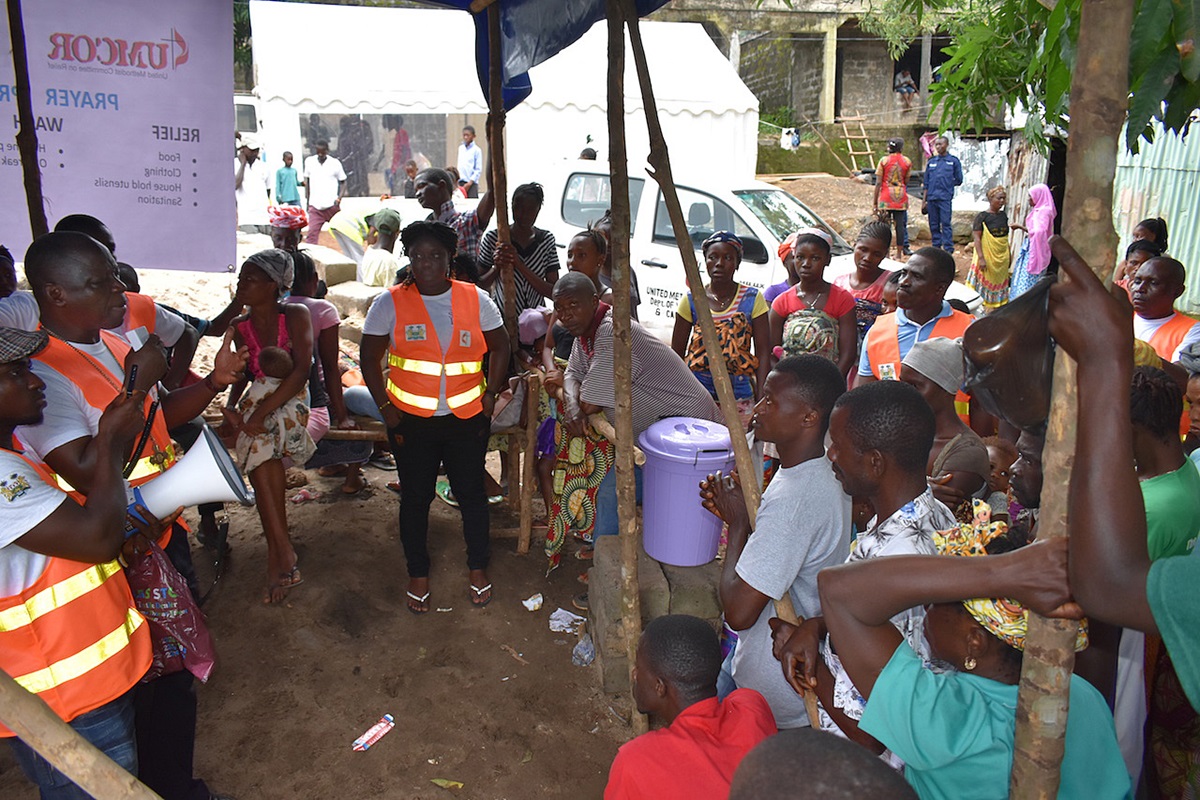
Later that day, Yambasu and team moved over to the Pentagon displaced center where he spoke to the survivors. “We have all suffered irrespective of our religion — Muslims and Christians alike. But we at The United Methodist Church have come to show you our empathy. We are cognizant of what other organizations are doing to help out in this disaster. You could have food and clothing. But if you are sick, all of that will not mean much to you. That is why we have opened a health service here.
“This country has gone through war, which was responsible for why most of you migrated to Freetown from the provinces. Just when some of you were trying to recoup your lives, Ebola came and thousands more died. Just when we were trying to put our lives together, this flooding and landslide calamity happened again.”
Yambasu said the church team was there so everyone could pray for God to “bring a halt to our problems” and bring peace.
“We understand the plight many of you have gone through — some of you have lost many loved ones in your family. There are even some of you here who are the only survivors in your family,” Yambasu said.
The bishop told the survivors that he knows it is a difficult time, but promised that “our God is a good God. May He wipe away the tears from our eyes.”
Yambasu said both the Bible and the Koran teach peace.
“So we are here to say ‘Thank you, Lord.’ May you have mercy on those that died. Provide for us who survived the disaster, oh, Lord. We thank you Lord and pray that in the midst of all the disaster, you’d remain to be our source of hope, because you are our only source of hope.”
Jusu is director of communications for The United Methodist Church in Sierra Leone. Swen is a communicator in the Liberia Conference.
News media contact: Vicki Brown at (615) 742-5470 or [email protected]. To read more United Methodist news, subscribe to the free Daily or Weekly Digests.
Like what you're reading? Support the ministry of UM News! Your support ensures the latest denominational news, dynamic stories and informative articles will continue to connect our global community. Make a tax-deductible donation at ResourceUMC.org/GiveUMCom.


