
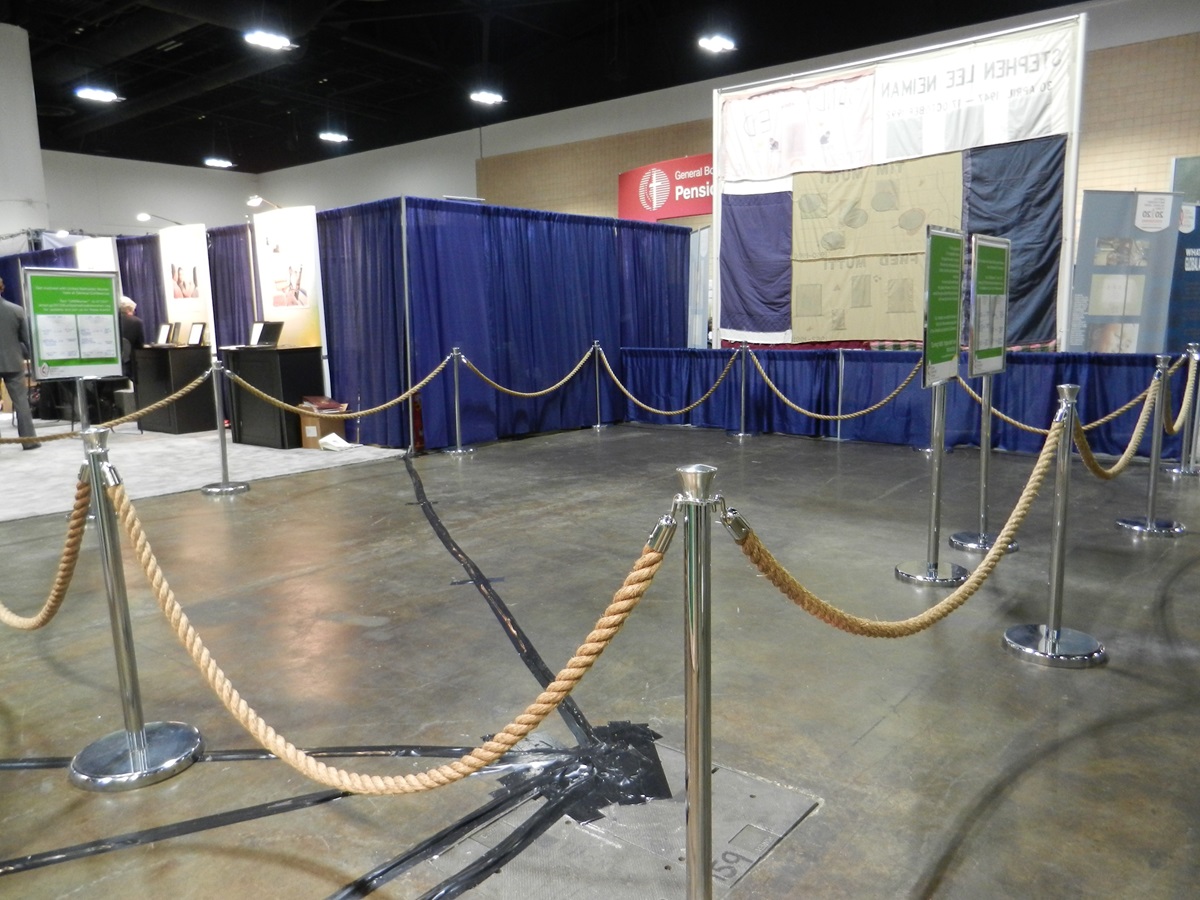
United Methodist Women didn’t have an exhibit at General Conference. Instead, they roped off their display area and set off on a flurry of learning and mission opportunities around Tampa, where General Conference is being held.
They did, however, leave an “in-mission” sign for inquiring minds:
“In 600 square feet, it is impossible to show 143 years of women in mission, the work our members are doing in their churches and communities every day, the lives transformed through the global ministries of the Church, the ways United Methodist Women will move into the next 143 years.
“So instead, we used the money to fully fund the seminary education of two female local pastors in Cameroon.
“Turning faith, hope and love into action, United Methodist Women.”
Harriett Jane Olson, chief officer of the national United Methodist Women, said the scholarships in lieu of a display will help the recipients prepare for leadership and service in the church and world.
“These women were recommended to us by the mission director in Cameroon, and they will be attending the Ecumenical School of Theology at the University in the Cameroon capital,” Ms. Olson reported.
“Helping these local pastors attend divinity school is part of raising the status of these women and is just one way we assist in empowering women leaders globally. Equipped with a seminary degree, they will have access to different leadership roles and benefit both the church and their communities,” she said.
Emily Miller, art director for the national United Methodist Women, designed the non-display and organized daily “MeetUps” where members and friends talked with mission personnel and partners and enjoyed their sisterhood.
The activities included participation in a noontime rally for immigrants’ rights and against private prisons on April 29 and a mission field trip to Cornerstone Community Center, a United Methodist Women national mission institution in Tampa, May 2. United Methodist Women members also met outside the convention center each evening for prayers.
Women learned about the actions planned for the day via email, text, twitter and a schedule posted at the display area each morning.
“We felt that at this General Conference we had the opportunity to spend mission dollars in a different way, in a way that makes sense to our members and helps women around the world,” Ms. Miller said.
“The MeetUps and other actions reflect the work United Methodist Women members are doing in their communities every day,” she added.“We wanted to focus on building community, on connectional mission and on supporting women in the global context — especially as we begin a new phase in our organizational life as an autonomous organization.”
Yvette Moore is editor of response, the magazine of United Methodist Women.
Like what you're reading? Support the ministry of UM News! Your support ensures the latest denominational news, dynamic stories and informative articles will continue to connect our global community. Make a tax-deductible donation at ResourceUMC.org/GiveUMCom.


